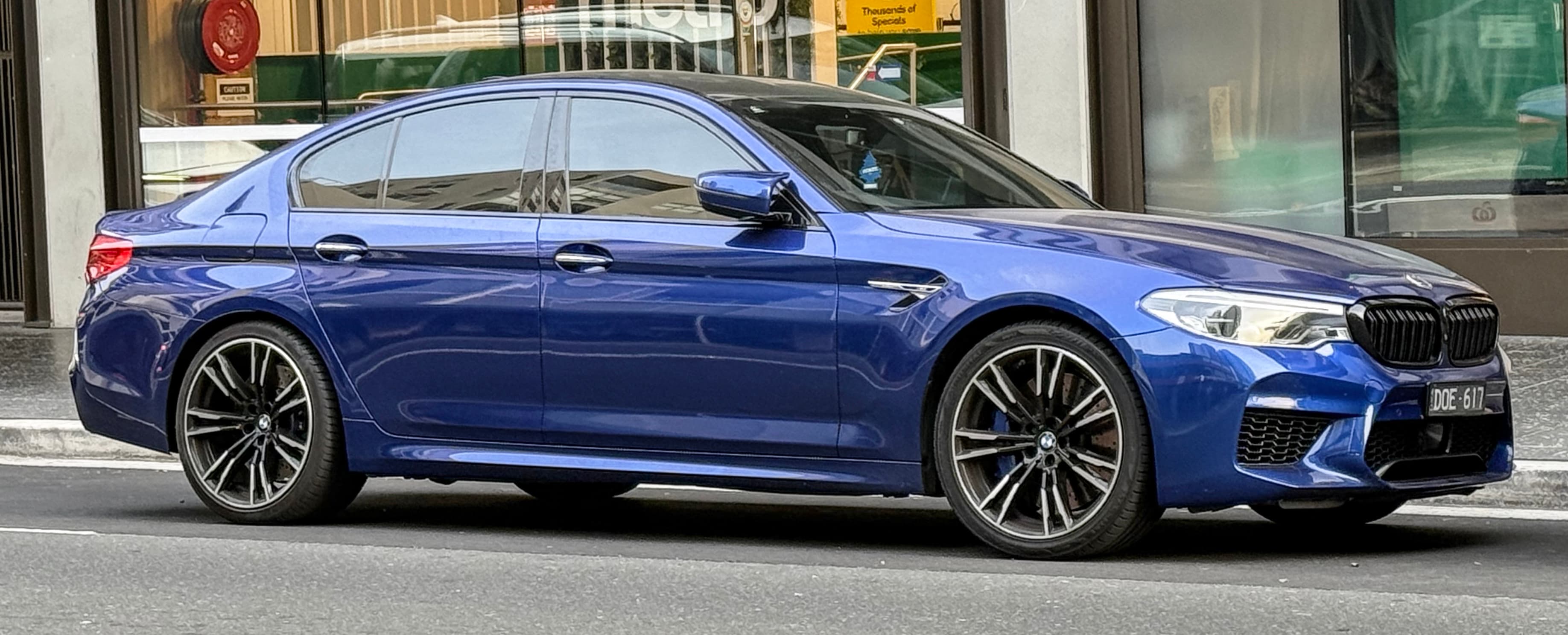
Factory character
The factory details buyers are actually trying to keep intact
Factory Equipment
The equipment story should identify the original drivetrain, chassis format, major factory packages, and cabin hardware before modifications or seller-added features enter the discussion. BMW M5 and M5 Competition specification anchors the model context; the build record anchors the individual car.
Factory character
The factory details buyers are actually trying to keep intact
Engine focus
The motor that defines the whole equipment story
Core factory specification
Engine
4.4L S63 twin-turbo V8. This is part of the factory specification buyers should verify when separating comparable BMW M5 (F90) examples.
Transmission
8-speed automatic. This is part of the factory specification buyers should verify when separating comparable BMW M5 (F90) examples.
Driveline
M xDrive with RWD mode. This is part of the factory specification buyers should verify when separating comparable BMW M5 (F90) examples.
Power
600-627 hp. This is part of the factory specification buyers should verify when separating comparable BMW M5 (F90) examples.
Equipment buyers should verify
Factory identity
Confirm factory wheels, seats, trim, and major packages against the build story.
Chassis and controls
Use color and interior pairing as part of the valuation read, not just presentation.
Cabin and trim
Separate top-lane collector specs from driver-grade cars before using comps.
Retained hardware
Check that original hardware accompanies the car when meaningful parts have been changed.
Documentation signals
Strong evidence
Correct tier, coherent spec, and clear ownership story. Brake, wheel, and interior condition matching the ask. Restrained modification path or stock presentation.
Reasons for caution
Competition or CS pricing on a muddled or heavily tuned car. Weak consumable history on a car being sold as fully sorted. Generic big-power language replacing actual spec clarity.